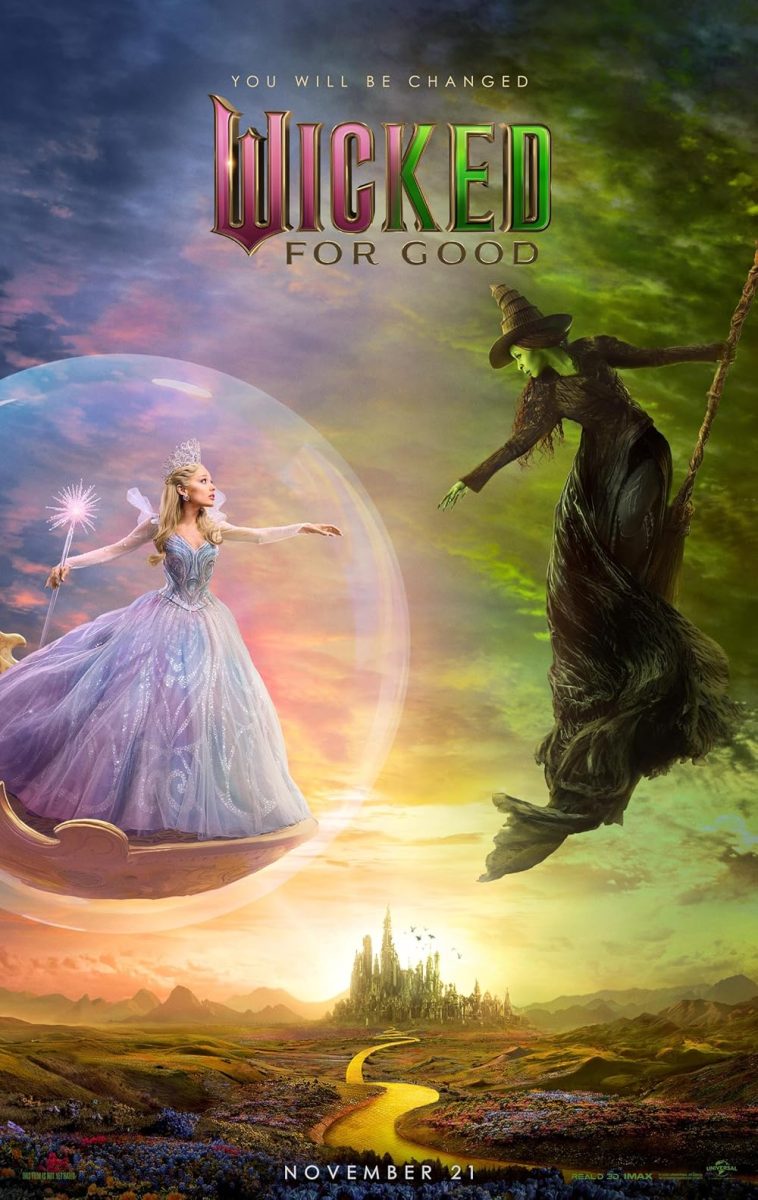
Wicked: For Good, which premiered on Nov. 21, doesn’t just return fans to Oz, it drops them straight into a whirlwind of magic, mayhem and musical drama. The highly anticipated sequel, directed by Jon M. Chu, reunites Cynthia Erivo and Ariana Grande as Elphaba and Glinda, reinforcing that the world of Wicked is just as spellbinding on screen as it is on Broadway.
Since its Broadway debut in 2003, Wicked has become one of the most influential and beloved musicals of the 21st century. When the film adaptation premiered last year, it drew fans to the story. The announcement of a two-part movie left viewers with high expectations after the success of the first movie.
Unlike the whimsical joy of the first movie, the sequel leans into a darker and more emotional side, leaving viewers teary-eyed as they exit the theater. The story picks up multiple years after the ending of the first movie. Elphaba has been framed as the “Wicked Witch of the West” by Madame Morrible and the Wizard, forcing her into hiding in the Ozian Forest. Being far from the life she once knew, Elphaba is determined to show citizens how the Wizard is corrupting their minds. Meanwhile, Glinda remains in Oz, admired by the public and growing in popularity. These two characters, who developed such an incredible bond in the first film, are now forced to be apart.
Grande’s performance stands out in the film. With her theatrical vocals and effortless acting, she easily balances Glinda’s fun personality with heartbreak and insecurity. Jonathan Bailey as Fiyero and Ethan Slater as Boq also give meaningful performances that do justice to the characters from the original musical.
In comparison, Michelle Yeoh’s portrayal of Madame Morrible falls a bit short. Her acting is bland and she never embraces the manipulation and darkness the character truly needs. Though she was originally hesitant to take the role due to her lack of formal vocal training, she was encouraged to by Chu. This definitely shows in her vocals, which are notably pitchy and disappointing.
With all music and lyrics written by legendary Broadway Composer Stephen Schwartz, the film remains similar to the Broadway soundtrack, with two additional numbers. “No Place Like Home,” sung by Erivo, is an emotional scene that captures Elpaba’s complicated relationship with Oz. Grande’s song “The Girl in the Bubble,” feels like an unnecessary placeholder and only repeats what the audience already knows about Glinda’s character adding nothing meaningful to the film.
Visually, the film looks beautiful. The Emerald City is bright and bold while the forest scenes with Elphaba are dark and mysterious. The costumes also reflect how the characters feel — Glinda’s outfits are glamorous while Elphaba’s are more dramatic. The CGI is used impressively and heavily in scenes with talking animals and magic. These choices enhance the film and make the world of Oz feel incredibly complex and real.
Overall, Wicked: For Good has minor flaws and is a powerful and emotional culmination of Elphaba and Glinda’s story. Amazing music, beautiful storytelling and heartful performances by most of the actors allow the audience to feel a plethora of emotions.
Through tears and laughter, we can confidently say that this movie has changed us for good.