This might seem like a precarious time to consider beginnings. The world is winding through the motions of winter; snow settles, light thins out daily, marking small deliberate endings. We’ve entered a period of bracing — a cold front has engulfed us, and stillness is a constant. Yet, despite it all, I find myself thinking about beginnings anyway; about what it means to gather in a room and build something from scratch, even through the cold and global uncertainty.
There’s a defiance to choosing warmth, when everything outside demands retreat.
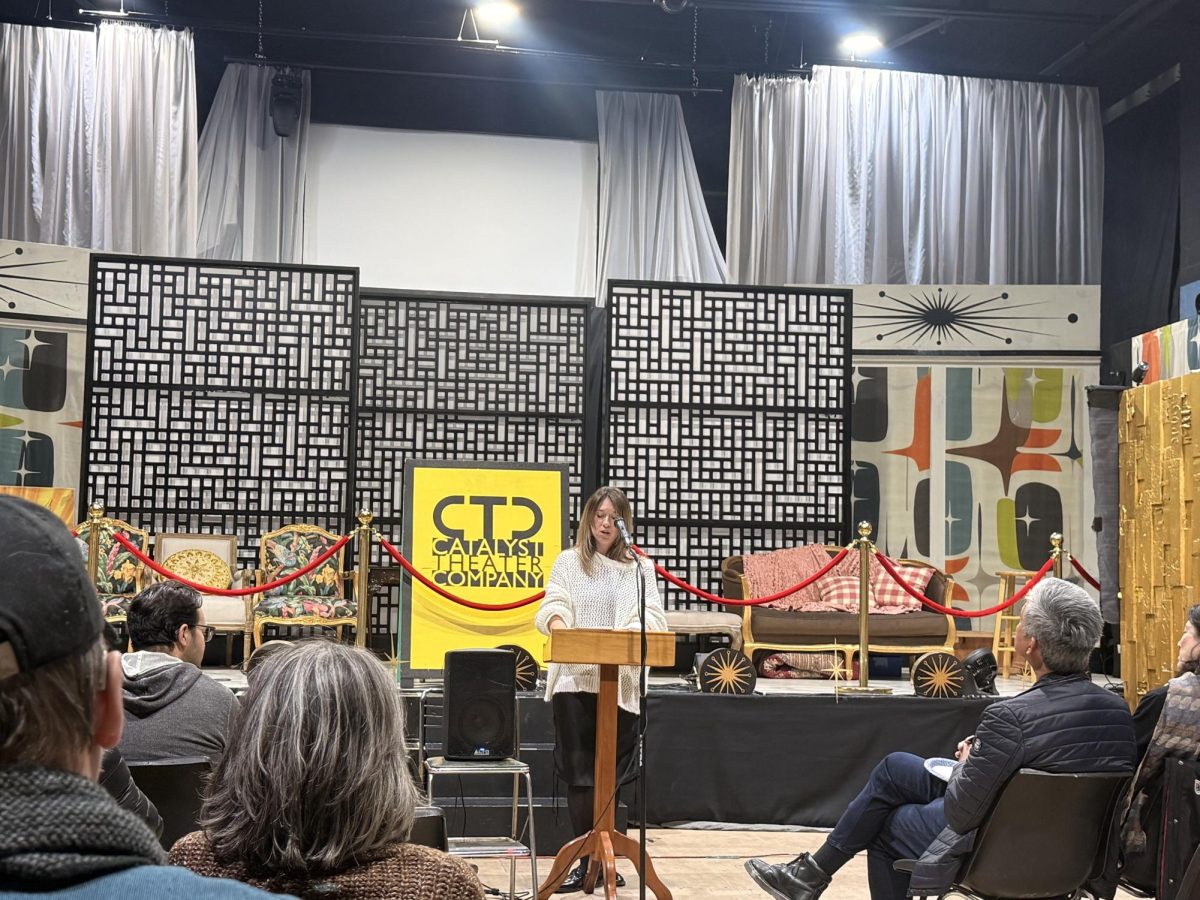
At duCret Center of Art in Plainfield, that defiance looked like folding chairs set up in uneven rows, a microphone stand adjusted slightly too high, programs printed and passed hand-to-hand. It looked like people shrugging off heavy coats and hats and choosing to stay a while.
The Fields Poetry Reading Series, now in its second year, opened its season on Feb. 19 with warmth.
The first voice of the night rose steady and reflective. Peter E. Murphy, author of 13 poetry books, opened with a line that felt almost submerged: “In my anesthetic dreams, I too breathe underwater without drowning.” His poems moved between illness and endurance, memory and the quiet negotiations of aging. He read with patience, as if each word deserved to land fully before the next arrived.
Paul Rabinowitz followed with a sharper edge. A writer, photographer and founder of ARTS By The People, Rabinowitz’s work was urgent. In one poem, he described “a broken clothesline leaning against its shadow / nothing to hang memories on.” The image stood spare and devastating.
His poems brushed against political division and contemporary unrest, but they never lost their lyrical grounding. There was frustration, yes, but also a search for connection.
Still, the most electric moment came not from the featured readers, but from the open mic portion of the evening.
High school students, local writers and first-timers clutching folded pages stood up and read. Some voices shook. Others steadied halfway through. There’s always that split second before someone begins — the inhale, the quiet recalibration — and then their words belong to the room.
We spend so much time analyzing poetry in classrooms that it’s easy to forget poems are meant to be heard, not annotated and quizzed. At The Fields they were shared and applauded.
Moriah Cohen, English teacher at WHS and one of the organizers of the series, believes that communal exchange is the point. “It allows younger generations to see that poetry can exist off the page,” she said.
Off the page and not confined to annotation or a thesis statement, but breathed into existence.
Cohen admitted she wrote in high school but didn’t take herself seriously until a professor told her, simply, “You could do this.”
That sentence fueled her writing and career. Spaces like The Fields offer that same permission — the chance to begin, even if you’re unsure.
There is hope that we will revive a larger poetry series at WHS, similar to the one once run by former English Teacher John Cheddar, bringing award-winning poets in for assemblies and craft talks. It will take funding and time. But the idea remains: Poetry is a vital part of learning, a collective experience of warmth.
By the end of the night, the room felt warmer than when we entered. In a season that asks us to prepare for cold, The Fields offered something like shelter.
The next Fields Poetry Reading Series event will take place on April 23 at 7 p.m. at duCret Center of Art in Plainfield, NJ.