
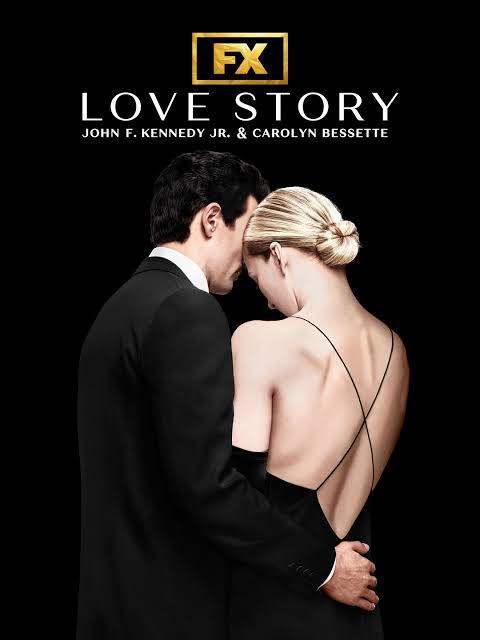
There is something unsettling about the way we watch celebrity tragedies as entertainment. Real people die and real families grieve, but their lives are often resurrected as must-watch television.
Ryan Murphy’s newest FX series Love Story: John F. Kennedy Jr. & Carolyn Bessette is the latest example of this phenomenon, turning one of America’s most mythologized couples into another glossy historical drama.
But the reaction to the show reveals something deeper than disagreement over historical accuracy: a cultural obsession with romanticizing the lives of public figures.
John F. Kennedy Jr. and Carolyn Bessette died in a plane crash off Martha’s Vineyard in 1999. Their ashes were scattered in the Atlantic, leaving only a lingering sense that their story never truly ended.
Murphy’s show capitalizes on their mythology, and, to those closest to the story, it feels less like a tribute and more like exploitation. Jack Schlossberg, Kennedy’s nephew, publicly condemned the series, urging viewers to remember one key letter: “F for fiction.” Speaking on CBS Sunday Morning, Schlossberg criticized Murphy for “making a ton of money on a grotesque display of someone else’s life.”
The backlash does not stop there. Actor Daryl Hannah, who dated Kennedy in the early 1990s, also criticized the series for portraying her inaccurately. In an essay for the New York Times, she described the depiction of her character as “textbook misogyny” and insisted that many of the behaviors attributed to her were “not creative embellishments of personality,” but instead outright fabrications.
Her response highlights the ethical dilemma at the center of these shows. When creative liberties reshape people into fictional characters, the line between storytelling and defamation becomes blurred.
The most revealing reaction, though, comes from the audience. The show was made because viewers were fascinated with the Kennedys as a kind of American royal family. Since Jacqueline Kennedy famously framed her husband’s presidency as “Camelot,” the dynasty has been preserved through layers of mythmaking. Every tragedy becomes part of the legend; every personal relationship becomes America’s property.
Bessette, in particular, has been transformed into a symbol rather than remembered as a person. In the decades since her death, a loose network of bloggers, stylists and internet commentators have turned her minimalist 1990s fashion into a kind of aesthetic doctrine. Her camel coats and slip dresses have been analyzed like works of art. But Bessette herself resisted that kind of attention. She declined major magazine profiles and reportedly struggled under the relentless pressure of paparazzi. This is the irony of Love Story: it attempts to sympathize with Bessette’s experience while simultaneously contributing to the very spectacle that once consumed her life.
This pattern is not unique to Love Story. Murphy has built a career dramatizing real tragedies, from the Menéndez brothers in Monsters to O.J. Simpson, Gianni Versace and Monica Lewinsky in American Crime Story. His shows blur the boundaries between historical reconstruction and sensational storytelling. As audiences consume these dramatizations, they also participate in a larger cultural pattern. Parasocial relationships — one-sided emotional attachments to public figures — have become normalized in the age of social media. The Kennedys are no exception.
Even if one sets aside these ethical concerns, the show struggles with storytelling. After the first few episodes, the narrative begins to flatten into a familiar formula: two beautiful actors recreating famous photographs and paparazzi moments. The early intrigue — Bessette’s professional world at Calvin Klein and her uneasy entry into the Kennedy orbit — gives way to repetitive romantic drama. Aesthetic accuracy is not narrative depth. The grandeur of the show begins and ends with its imagery.
The fascination with the couple will likely persist. But perhaps the more interesting question is: Why do we feel entitled to their story?