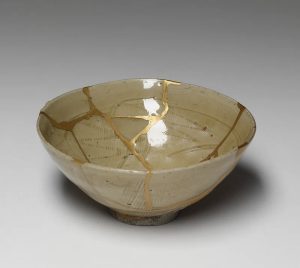
An example of Kintsugi
photo courtesy of
rawpixel.com
(Photo courtesy of rawpixel.com)
The Art of Second Chances
Lance Katz Rebuilds Broken Pottery Through the Art of Kintsugi
Most people throw broken pottery away. Senior Lance Katz is learning how to turn it into art.
Katz’s senior project focuses on Kintsugi, the Japanese art of repairing broken pottery with lacquer and gold powder, highlighting cracks rather than hiding them. The practice, whose name translates to “golden joinery,” is rooted in the idea that flaws and imperfections are part of an object’s history rather than something to erase.
“For my final product, I’ll have multiple finished pieces along with a vlog-style video documenting the process,” Katz said.
Originally, Katz planned to do his senior project on composting because of his interest in sustainability and reducing food waste. But after his father rejected the idea over concerns it would “stink up the house,” Katz began looking for another project centered around restoration and reuse.
“Kintsugi was another way to recycle and bring life to something that would otherwise end up in a landfill,” he said.
Although Katz has experience in woodworking, painting, sculpting, pottery and other art forms, Kintsugi is completely new territory. Part of what excites him most is the philosophy behind it.
“The idea that things are more beautiful when they’re broken is really foreign to our current society,” Katz said. “It’s important to step back and think about it.”
Most days working on the project involve thrift store trips for discarded pottery, gathering materials like gold powder and lacquer and carefully rebuilding shattered pieces “like a golden puzzle.” Through the project, Katz hopes to gain both practical skills and a new appreciation for preserving works of art instead of discarding them.
Bringing Soul to Seoul
Elias Wood’s Cultural Culinary Journey
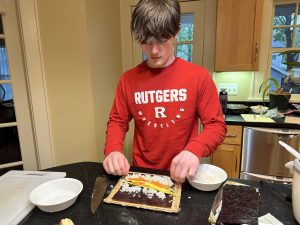
Across cultures, food is embraced for its ability to tell stories. It allows us to share love, laughter and pass on centuries-old family traditions. One WHS senior has taken on a new task this year for his senior project: Elias Wood is becoming the storyteller, with food as his medium.
“My mom is Korean, and my dad is from Alabama,” said Wood. “I wanted to use the senior project as an opportunity to learn more about my culture and background through Korean-Southern fusion food.”
Wood pushed himself to mold his curiosity into a hands-on learning experience. With no background in cooking, he approached the project as both a beginner and a student of his own heritage.
“I learned how to cook pretty much from this project, as I never really cooked before now,” he said.
The process is a blend of research and experimentation. “I’ve been researching with family cookbooks and recipes online, and then sourcing the ingredients,” he explained. But to represent his rich cultural heritage, Wood had to push himself beyond following instructions. Korean-Southern fusion recipes are sparse, so he had to be thoughtful in melding these two distinct culinary traditions without much inspiration from other recipes.
He incorporates his father’s Southern staples like Conecuh sausage — known for its bold, smoky flavor — into Korean dishes like galbi-jjim, a braised short rib dish that indulges in rich, savory-sweetness. In other meals, he brings Korean flavors into Southern comfort cooking, experimenting with recipes like biscuits and grits alongside Korean ingredients and techniques learned from his mother.
Other dishes like kimbap, a Korean rice roll filled with vegetables and proteins, and gyeran-jjim, a soft, steamed egg custard, have presented unique opportunities to blend both sides of his background. Even the most classic of Southern recipes, like West Indies salad — a vinegary crab salad — take on new dimensions when paired with Korean flavors.
Wood knows better than anyone that, sometimes, the best way to understand where you come from is to taste it. Together, these recipes from the menu that tells the story of who he is.
Spirits of Westfield
Alaina Stewart Transforms Local Legends Into an Immersive Tour Experience

For most people, ghost tours are something experienced on vacation: a lantern-lit walk through Savannah, GA, or a late-night
tour through Salem, MA. For senior Alaina Stewart, they became the inspiration for an entire business concept right here in Westfield.
Stewart’s senior project, “Westfield Ghost Tours,” combines local history, storytelling and entrepreneurship into a fully developed tourism business plan. Her final product will be a website advertising guided walking tours centered around some of Westfield’s most haunting stories and locations.
“I was inspired over spring break,” Stewart said. “I went on ghost tours in Savannah and Tybee Island, and I thought it was interesting how they integrated history into storytelling.”
When she returned home, Stewart realized Westfield had more than enough folklore for tours of its own. From the John List murders to the Watcher house, and even the legacy of Charles Addams, she saw an opportunity to turn local history into an immersive experience.
“A lot of research goes into this project,” Stewart said. “I’m researching the history of Westfield and how ghost tours are created, how stories are written and how businesses make pricing and advertising.”
Most days working on the project involve reading historical records, books and articles about Westfield while also creating mock advertisements and promotional flyers for the company.
Stewart said the biggest challenge so far has been structuring the route itself and deciding which locations to include.
What excites her most is the balance between creativity and practicality.
“I like that the project lets me learn more about the town I grew up in while also building something that could realistically exist,” Stewart said.
Crafting Canine Couture
Phoebe Paone’s ‘Ruff’ Take on High Fashion
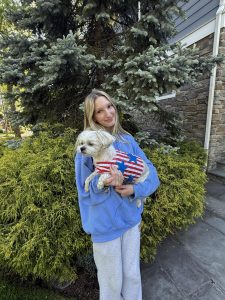
Between homecoming, prom and graduation, senior year at WHS is already filled with outfit planning. But while most seniors are focused on what they will wear, senior Phoebe Paone has taken a slightly different approach: She’s spending her senior project designing seasonal outfits for dogs.
You read that right — dogs. And not just one or two outfits, either. Paone is ensuring that her pups are red carpet-worthy every month of the year.
While the project may seem ambitious, sewing is not new to Paone. “The main time I practiced sewing was back in seventh grade,” she said. “But since then, especially now in senior year, I haven’t done much sewing at all.”
Her senior project became the perfect opportunity to return to the craft creatively. “I started sewing again by creating 12 different dog outfits that each correspond to a different month and holiday throughout the year,” she said. “The outfits match holidays and themes like Valentine’s Day, Halloween, Christmas and other seasonal events.”
Each outfit requires careful planning. Fabrics must be chosen to match the season, while making sure designs are functional — and, of course, adorable. The canine fashion line includes festive holiday prints, cheerful pastel colors and spooky Halloween details.
Paone’s efforts reflect what the senior project is all about: a chance to slow down and reconnect with a hands-on, creative outlet. The capstone is a custom-made dog calendar, featuring puppy photoshoots with each outfit of the month.
By June, the best-dressed residents of Westfield won’t be at the prom; they will be the ones with four legs.